…and why that’s a good thing
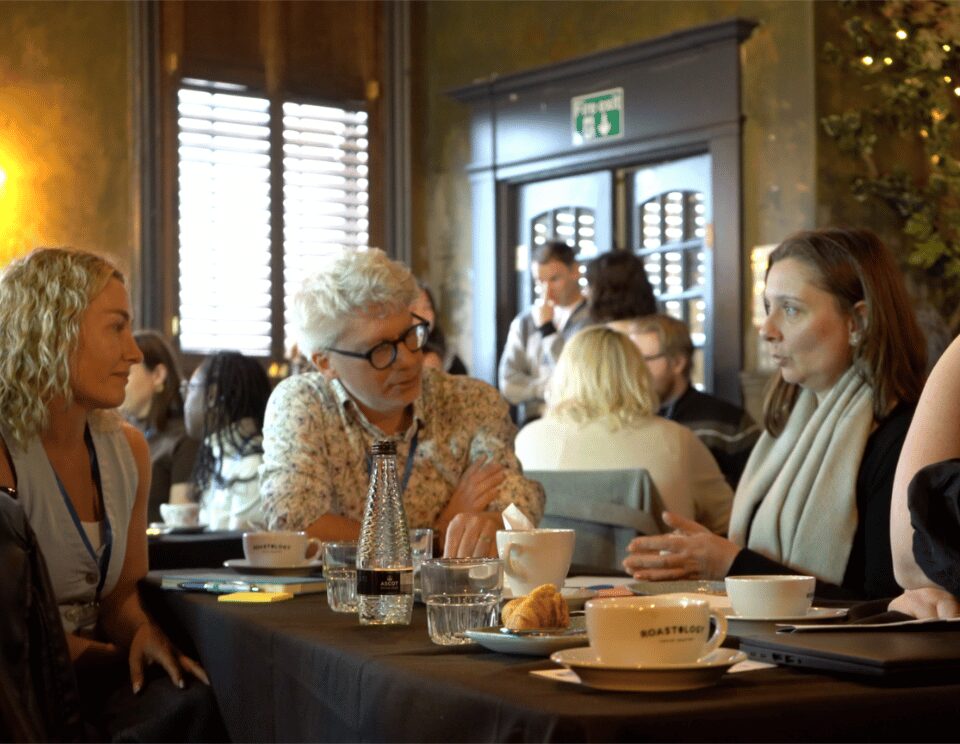
If you’ve ever attended an innovation workshop, you’ll know the scene: a wide range of stimulus (from category products to tech, data, video, magazines, Post-its, fidget toys and flipcharts), drinks and snacks aplenty, people enthusiastically waving stickers and notes around, and at least one colleague saying, “this may sound ridiculous, but…”.
And that’s exactly when you know it’s working.
Breakthrough innovation rarely emerges from conventional conversations in familiar rooms. It comes from stretching thinking, disrupting habits, and getting people into a mindset where playfulness feels not only acceptable, but productive. That ‘ridiculous’ idea someone blurts out after the third energiser? It may turn out to be the foundation of your next market-leading innovation.
Create the right conditions for creativity
Creativity can feel intimidating, as though it’s reserved for the naturally gifted or the permanently ‘ideas-driven’, but in reality it’s something everyone can do. The myth that creativity strikes only in flashes of genius overlooks what actually fuels it: having a clear process, the right prompts, and an environment where people feel safe to explore without judgement.
When those conditions are in place – permission to play, space to think, a structure to guide the wandering mind – even the most self-described ‘non-creative’ person can surprise themselves. Creativity isn’t magic. It’s a way of thinking that anyone can access with the right frameworks and support.
Workshops work because they deliberately shift people away from business as usual. Fresh settings, unexpected stimuli, and time away from inboxes all help teams move into an open, exploratory mode.
Regular breaks matter too; creativity dips sharply when brains are tired, hungry, or secretly checking emails under the table. Focused thinking, combined with regular time out to recharge, walk around, and fuel up, is key.
But the most overlooked ingredient? Time. A full day can feel like a big ask, especially for R&D or insight teams juggling multiple projects. Yet time and again we see that giving people the space to think, talk, test, discard, rebuild, and spark off one another pays dividends. You simply can’t rush breakthrough thinking.
Bring diverse perspectives into the room
One of the strongest predictors of truly novel ideas is diversity of thought. Teams made up of people with different backgrounds, disciplines, and ways of thinking generate richer, more unexpected solutions.
Research shows that diversity enhances creativity and innovation by bringing varied experiences and viewpoints to problem-solving, often resulting in more effective and adaptable outcomes. Academic work also highlights that cognitive diversity helps teams challenge assumptions, spot blind spots, and improve idea generation – though it must be supported by a culture of psychological safety to realise its full value.
In practice, this means your best workshop probably includes the formulation scientist, the brand manager, the insights lead, the packaging engineer, and yes – even the colleague who always asks, “why don’t we just…?”. When managed well, those different lenses collide in ways that unlock thinking none of them could have reached alone.
Let ideas roam
The golden rule of good ideation is simple: nothing is off limits. Even the silliest thought can be the stepping stone to something game-changing. The important thing is to minimise judgement and maximise momentum. Set the tone early – encourage wild thinking and playfulness, capture everything, and keep the energy high. The first job is generating lots of ideas. Structure and filtering come later.
The bottom line
Innovation workshops aren’t indulgent awaydays. They’re purposeful, disciplined spaces designed to help teams think differently, stretch their imaginations, and create the conditions for genuine breakthroughs. When you combine stimulus, time, energy, diverse thinking, and a bit of playful chaos, you get ideas with real commercial potential.
And if you ever worry the session is getting too lively? Take it as a good sign. Creativity thrives in exactly that space.
If you’d like to design your next workshop with these principles baked in – and with techniques tailored for R&D and innovation teams – we’d love to help. Reach out to Karen Schofield, Head of Qual, to discuss your needs. Contact: [email protected]
PS: If you’re interested in why creativity isn’t just a matter of talent but a way of operating, John Cleese gives a brilliant explanation in this short lecture – it’s well worth a watch.



Stay In Touch